
$0 to ingest.
An agent that finds and fixes the root cause.
Raiya correlates every signal and executes only the runbooks your team has approved.
Cuts MTTR by 40%, running locally on OpenTelemetry.
Trusted by






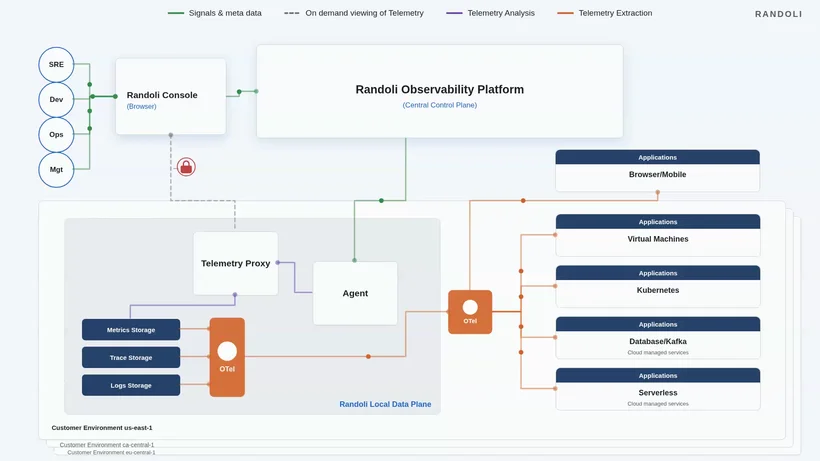
Your data never leaves your environment.
Local processing means logs and traces stay put. Randoli's control plane receives signals, not raw telemetry, so data sovereignty is the default rather than an add-on you configure later. It's all built on OpenTelemetry, so you're standardizing on an open spec, not a proprietary agent. It's a principle that runs through the whole platform, including AI, see our stance on data sovereignty.
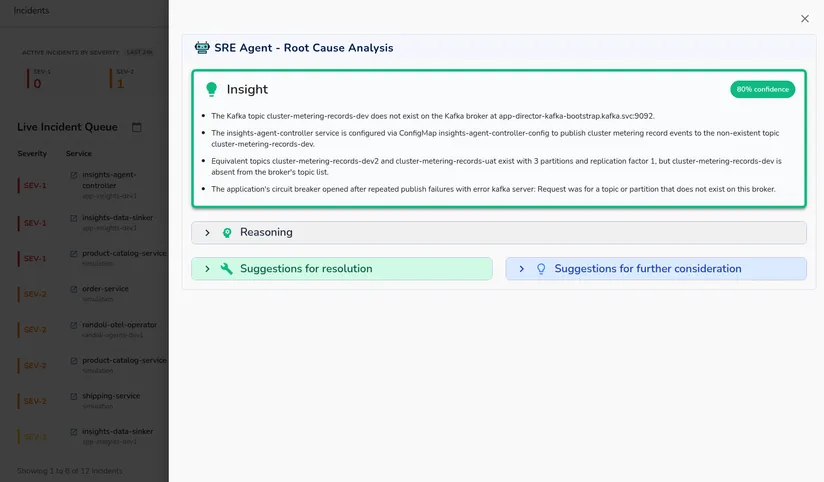
40% faster MTTR. An agent that investigates.
Raiya correlates signals across your stack and proposes root cause before a human opens a second tab. Teams using it report resolving incidents 40% faster than their pre-Randoli baseline.
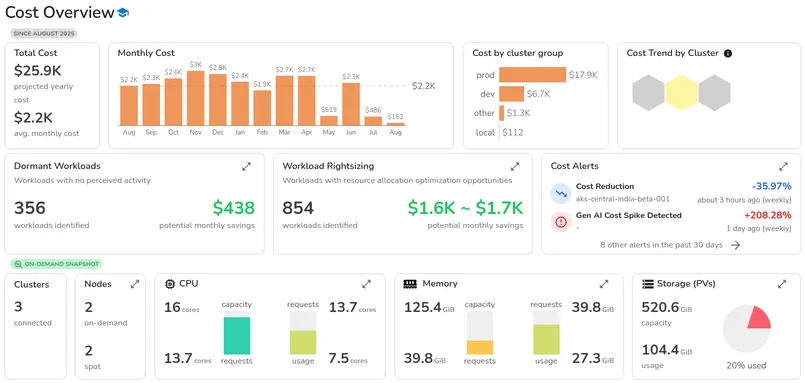
Cost, right alongside APM and security.
Chargeback and cost attribution sit next to the same traces and logs you already use for incidents, so a spend spike and the deployment that caused it show up in the same place.
Questions we get asked
"The Randoli Observability platform has proved to be indispensable. The visibility and insights it provides enabled us to reduce spend, and helped our developers to troubleshoot faster while reducing the burden on our platform team."
Tarun Mistry, CTO, Rail, A Ripple Company
Read how Rail moved off Datadog →"The Randoli Observability platform has been a game-changer for us. It provides real-time insights, proactive monitoring, and robust troubleshooting capabilities that keep our systems running smoothly 24/7. We can quickly identify and resolve issues, ensuring minimal disruption for our customers worldwide."
Charles Mimeaud, IT Director, AAJapan
Trusted alongside